

The Manchester Jazz Festival has long been one of the city’s most beloved cultural events. Far more than just a music festival, it reflects the evolution and rich history of jazz in Manchester. Originally launched in the 1990s as a modest event, it has since grown into one of the UK’s premier music and cultural occasions. Here’s an exploration of the festival’s journey, its roots, and its significance. Next on manchesterski.com.
The Birth of Jazz in Manchester
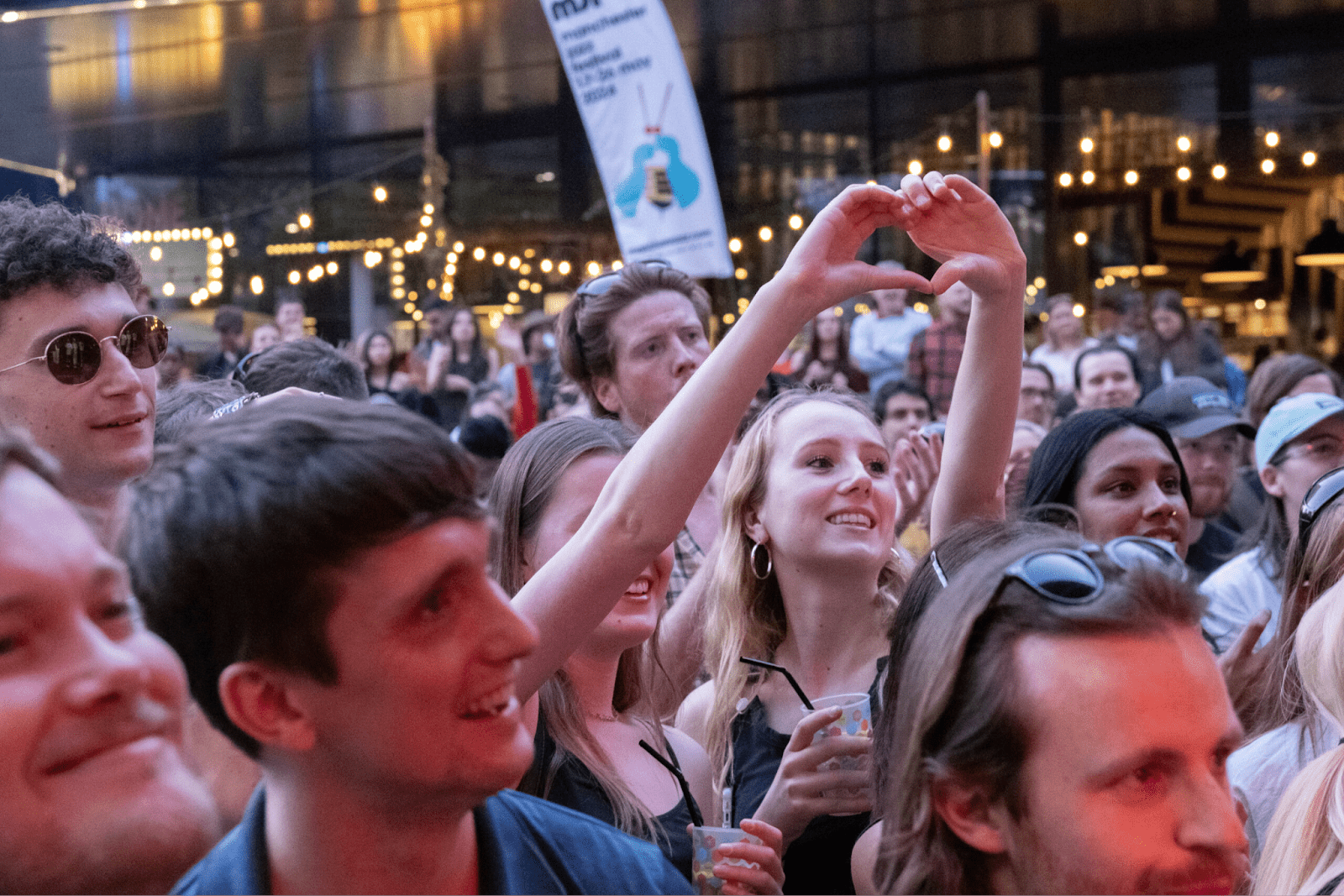
Jazz’s journey in Manchester is a fascinating tale that showcases the city’s cultural diversity and innovative spirit. As a hub for artistic innovation throughout the 20th century, Manchester became fertile ground for the growth of jazz.
Jazz began making its way into Manchester’s cultural scene in the early 20th century, following World War I. Originating from African-American musical traditions, jazz quickly captivated audiences and musicians alike. Early performances featured small groups and orchestras in venues like the iconic Free Trade Hall.
By the 1930s and 1940s, jazz gained considerable popularity, and Manchester became a key destination for both British and American jazz artists on tour. Post-World War II, the city’s jazz scene saw a shift towards modern styles like bebop and avant-garde, influenced by iconic figures such as Charlie Parker and Dizzy Gillespie.
A pivotal moment came in 1959 when legendary jazz musician Louis Armstrong visited Manchester. His performance marked a turning point in the city’s relationship with jazz, bridging cultural and geographical divides during an era of significant racial and social change. Armstrong’s visit left an indelible mark on Manchester’s music scene, inspiring new jazz clubs and festivals.
Founding of the Manchester Jazz Festival
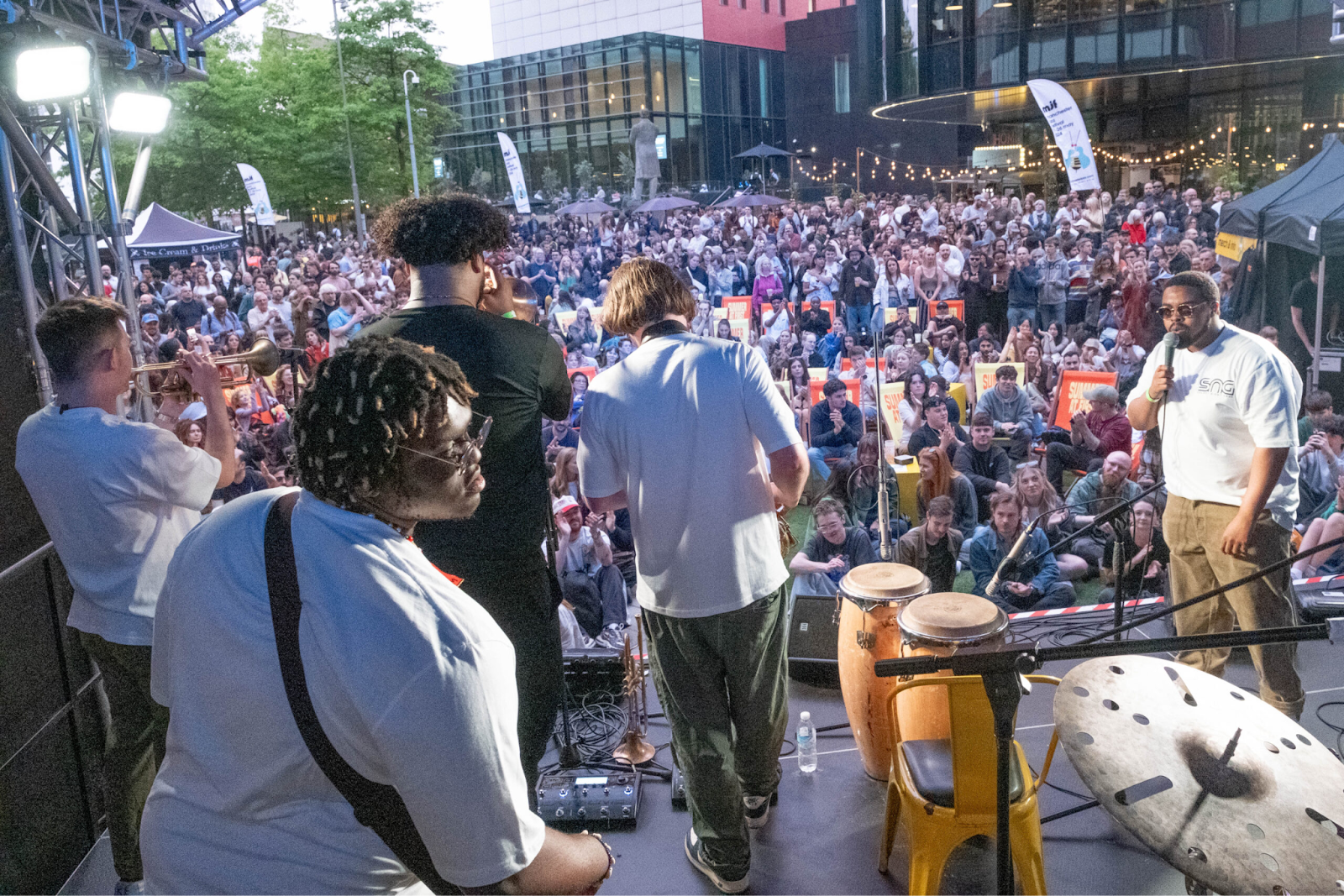
The Manchester Jazz Festival was established in 1996, ushering in a revival of modern jazz in the city. Initially conceived as a platform for showcasing local talent, it quickly evolved into a significant event, attracting international jazz stars. The inaugural festival featured a handful of performances supported by Manchester City Council, breweries, the Musicians’ Union, and the North West Arts Board.
The festival’s mission was to make jazz more accessible to a broader audience, encompassing a wide range of styles from traditional to experimental. Over time, it became a central part of Manchester’s cultural identity, championing diversity and inclusivity. Through initiatives like “MJF Originals,” the festival has consistently supported new creative works, encouraging artistic innovation within the genre.
The Festival’s Growth and Development
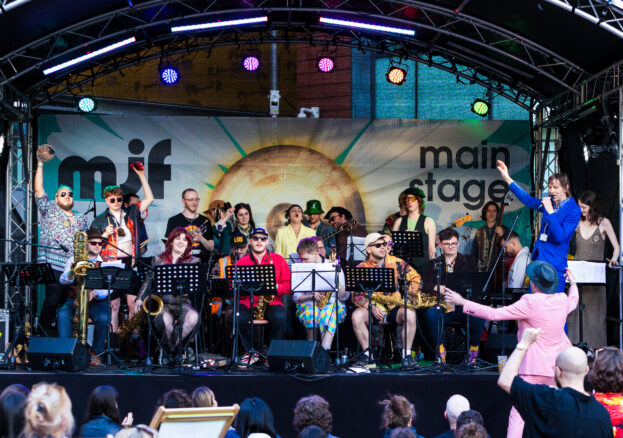
Manchester’s jazz culture remains as vibrant as ever in the 21st century, with the festival playing a key role in nurturing talent and expanding the genre’s boundaries. Local artists have introduced elements of hip-hop, electronic, and world music into their jazz compositions, reflecting Manchester’s dynamic and multicultural ethos.
By 2013, the Manchester Jazz Festival was the city’s longest-running music festival, drawing over 50,000 attendees annually. In 2018, the festival broke new ground by becoming the first UK jazz festival to join the “Keychange” initiative, which aims to achieve gender balance in the music industry by 2022.
The COVID-19 pandemic in 2020 posed unprecedented challenges for live music events worldwide. The Manchester Jazz Festival adapted by moving to a digital format, reaching audiences far beyond the city. This innovative approach ensured the festival’s survival and expanded its impact globally.
Since 2022, the festival has returned to its traditional in-person format, continuing its mission to discover emerging talent, engage new audiences, and celebrate jazz culture. It remains a cornerstone of Manchester’s cultural calendar, inspiring and entertaining jazz enthusiasts from around the world.