

In the 21st century, Manchester is a modern city rich in architectural landmarks, history, and traditions. Among its many traditions, one stands out—Trinity Sunday. This event is one of the oldest ever held in the city. In today’s rapidly changing world, Manchester’s Trinity Sunday is a testament to the resilience of tradition. For centuries, this day has embodied the city’s rich cultural and spiritual life. Do you know the story behind this celebration? Read more at manchesterski.com.
The History of Trinity Sunday
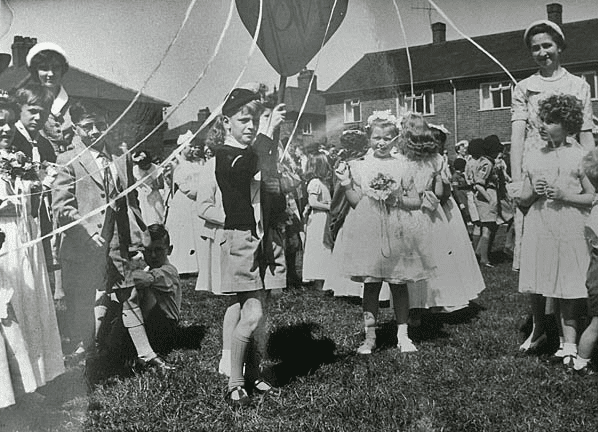
Trinity Sunday is an ancient religious celebration. It is often described as the day marking the foundation of the Christian Church or the day the Holy Spirit descended upon the apostles. Celebrated on the Sunday of the eighth week after Easter, Trinity Sunday is also known as “White Sunday” due to the white clothing traditionally worn for baptisms on this day.
Over centuries, the religious significance of Trinity Sunday intertwined with other civic celebrations, creating a unique blend of traditions. These traditions, even in the 21st century, reflect the diverse character of Manchester.
Celebrating Trinity Sunday in Manchester
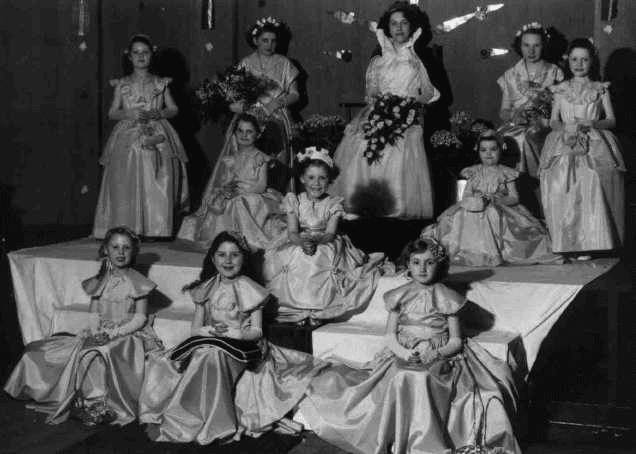
While Trinity Sunday has been observed worldwide for centuries, Manchester’s unique feature was the “walk” or parade. This tradition originated in Manchester, where people gathered in the city centre for a celebratory march.
Some of the earliest Trinity Sunday walks in Manchester date back to the early 19th century. This tradition emerged from the Sunday school movement, which advocated for children’s liberation during the late 18th century. A Sunday school in Manchester was officially registered in 1783.
During Trinity Week, children who worked in harsh and unsanitary conditions at industrial enterprises were freed from work on Sundays. They were allowed to enjoy leisure activities.
When the Sunday school in Manchester celebrated its first anniversary, its founders decided to gather all the children in St. Ann’s Square for a walk to Market Square, visiting a church along the way. This became the foundation for Manchester’s Trinity Sunday celebration. For decades, the faithful’s parade became an integral part of the city’s traditions. Every participant in the Trinity Sunday parade wore white garments, symbolising the historical and religious roots of the event.
The Evolution of the Trinity Sunday Parade
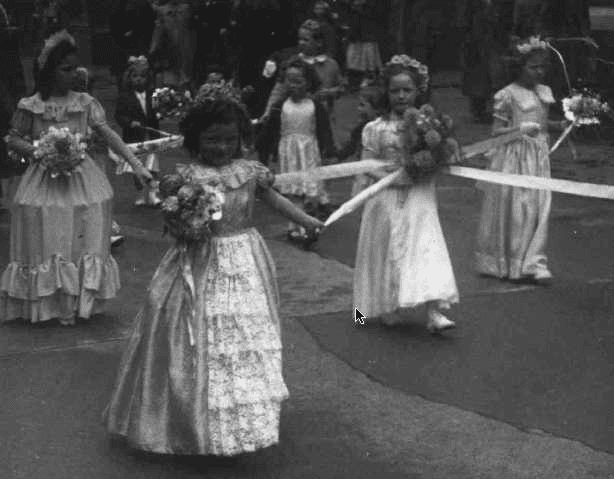
For many years, the Trinity Sunday walk included participants from various church schools across Manchester. Traditionally, the parade began early in the morning and passed through the city centre. By the mid-19th century, local Catholics had joined the Anglican church schools. By the early 20th century, representatives of all religious denominations in the city took part in the parade.
Church schools, one after another, would arrive at the event, accompanied by musicians and city orchestras. By the early 20th century, the Trinity Sunday walk had become a day of unity, with participants of different faiths, races, and backgrounds joining in.
In the first half of the day, each church held its services, followed by the parade and celebrations. The evening featured concerts, cricket matches, and children’s games. Trinity Sunday in Manchester was an eventful and diverse occasion.
Highlights of Trinity Sunday in Manchester
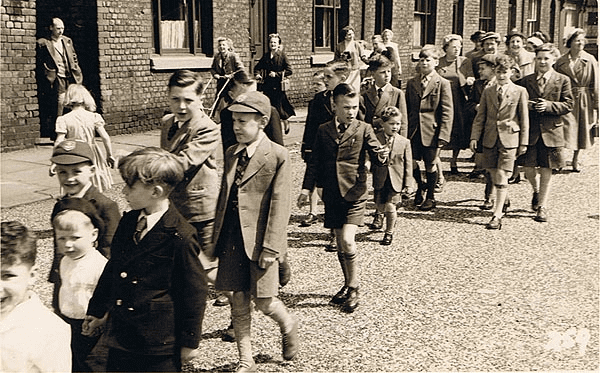
On this day, crowds gathered in the city centre to walk along Manchester’s main streets. All participants dressed in white clothing, bought specifically for the occasion. The outfits were elegant and festive.
For children, Trinity Sunday was particularly special. They eagerly anticipated the day all year, enjoying the chance to dress in their finest clothes and collect generous sums of money from neighbours—a tradition akin to Halloween in the United States.
Another essential part of Trinity Sunday in Manchester was visiting Sunday schools and reading prayers after the parade through the city streets.
These traditions remained integral to Trinity Sunday celebrations in Manchester until the 1950s. In the latter half of the 20th century, the popularity of this religious festival and the festive parade began to wane.
For centuries, the Trinity Sunday parade was a crucial part of the city’s cultural and religious identity, symbolising tradition and unity. As Manchester evolved, the celebratory walk became a part of the city’s history. Though the parade is no longer held in the 21st century, it serves as a testament to Manchester’s rich cultural past.