

In the golden age of British television, when millions of people across Great Britain gathered around flickering black-and-white screens, few could have guessed that some of the most famous programmes were being created not in London, but in the very heart of the industrial city of Manchester. More at manchesterski.com.
From the mid-20th century, Manchester became an important creative centre for the BBC. It was not just a regional office, but a true cultural heart, where vibrant and bold projects were created. Here, gritty realism and subtle humour combined, and the stories of ordinary people were given a chance to resonate across the entire country.
BBC Manchester – More Than Just Football and Shows
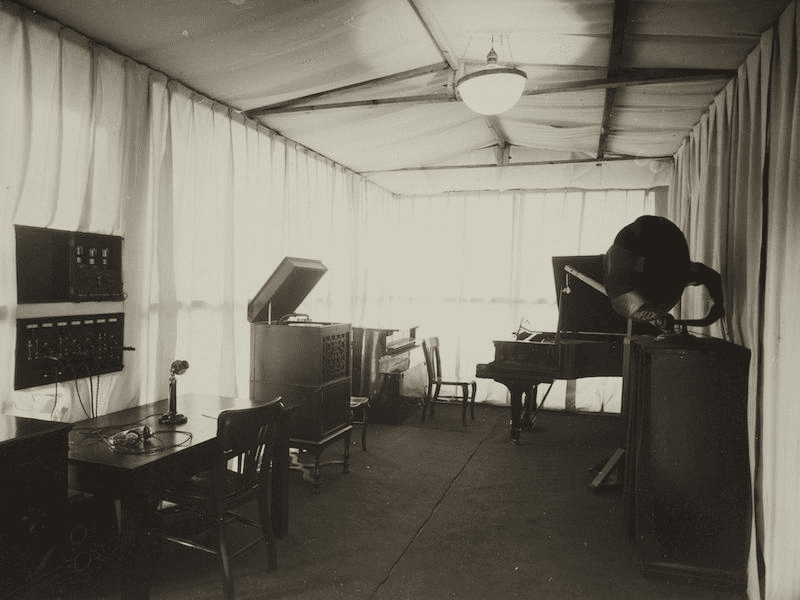
Until the mid-20th century, Manchester was known throughout the world for its industrial heritage, its music halls, and, of course, its football clubs. And it was then, on the city streets, in the red-brick buildings, in small studios, that a new side of the city was born – one connected with film and television.
It all began with the BBC’s growing commitment to decentralisation. While London remained the main centre, the BBC wanted to show society the issues and stories of people from all over Great Britain. Therefore, Manchester, with its working-class spirit and rich cultural life, was the ideal candidate.
Thus, the BBC has had a presence in Manchester since 1922, starting with the launch of the 2ZY radio station. And in the 2020s, the Manchester branch is considered one of the three main BBC bases alongside London and Bristol. It is not just a branch, but an important media hub with a rich history and a significant contribution to the development of British broadcasting.
How Did Manchester Become a BBC Media Centre?
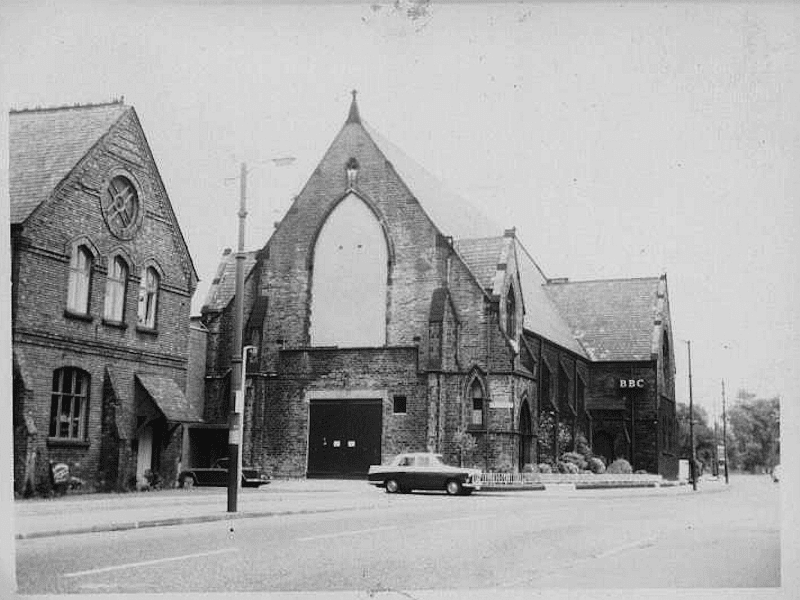
Manchester became the first city outside of London where a BBC television studio opened in 1954 – “Dickenson Road Studios”, a former church in the Rusholme area. It was here, in 1964, that the first episode of the legendary show “Top of the Pops” was broadcast, the same week “The Beatles” were at the top of the charts. The studio quickly became a creative hub: entertainment programmes were filmed there, including “It’s a Knockout”, which, thanks to BBC Manchester, grew into one of the country’s most popular projects.
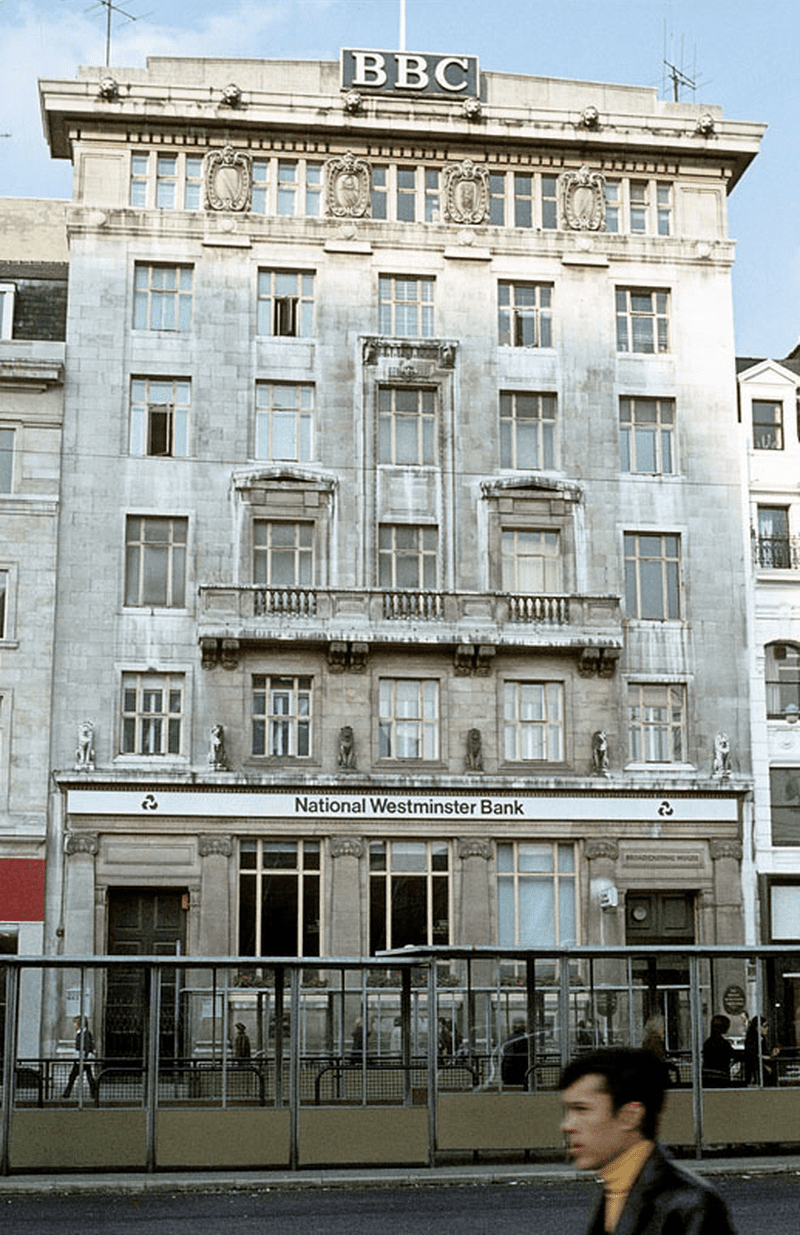
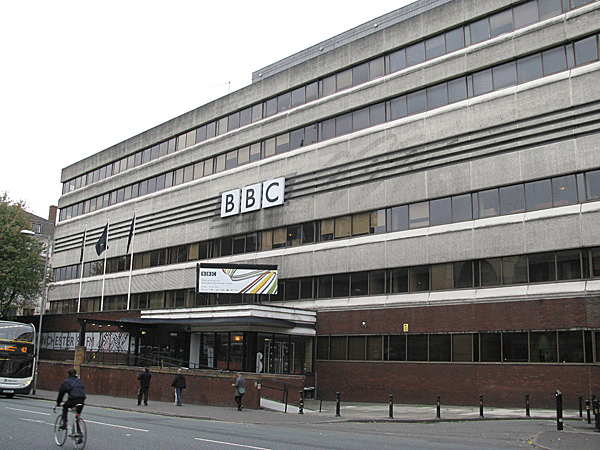
In 1975, the BBC moved to “New Broadcasting House” on Oxford Road. A major expansion of Studio A in 1989 made it the largest BBC studio outside of London. Despite a decline in the early 2000s, BBC Manchester soon regained its footing, launching hits like “Life on Mars”, “Waterloo Road”, and “Dragons’ Den”. The city solidified its status as one of the leading media hubs in the country and, indeed, all of Europe.
In 2011, the BBC headquarters relocated to the ultra-modern “MediaCityUK” complex in Salford. And the old “New Broadcasting House” studio was demolished to make way for the new “Circle Square” quarter.
From children’s programmes, which were watched in nearly every home, to landmark dramas – it was Manchester producers who created television projects that became the talk of the country. These shows didn’t just entertain – they raised important issues, made people think, and empathise with the characters.
The unique feature of BBC Manchester was in how they told stories. The programmes sounded simple and clear, without unnecessary pomposity, yet they struck a chord. They felt sincere and true-to-life — as if your neighbours or acquaintances were telling them. This approach made the broadcasts relatable and understandable to millions of people across the country.
The Phenomenon of Uniqueness – Only Real-Life Stories
One of the greatest achievements of the BBC studio in Manchester was its commitment to realism in its broadcasts. Producers and screenwriters working in the city began to create shows that didn’t embellish life, but reflected it – the historic struggles of the working class, social changes, family scandals. It was living history, which was fascinating to watch. Thus, the unique phenomenon of BBC Manchester was formed.
The uniqueness of BBC Manchester lay not only in where it was, but in how it showed this world to people. While London was creating pompous shows, the Manchester studio “spoke” the language of the common people – simply and honestly – about life in the city, about its people, about what worries everyone.
They didn’t make glossy productions for effect here, but real stories. Documentaries, local news, comedy shows, and dramas – all of it had character, but it also had soul. And the viewers felt: this is about us.
Popular Shows Produced by BBC Manchester
BBC Manchester wasn’t just a studio – it was a factory for real stories. The shows created here didn’t just entertain; they spoke to people in their own language:
- The music show “Top of the Pops” (1964–2006). One of the most iconic music shows in the UK. The first episode was filmed at the BBC studio in Manchester. “The Beatles”, David Bowie, Madonna, “Oasis”, and others performed on the show. Each week, the show presented the fresh singles chart, live performances, and recordings;
- The sports quiz “A Question of Sport” (from the 1970s, some episodes were produced in Manchester). A long-running sports show where sports stars compete in their knowledge of sporting facts. Its light-hearted format, humour, and the participation of genuine sporting legends made it a favourite show across the country;
- The television drama “Play for Today” (1970-1984). An anthology of social and psychological dramas. Many episodes were produced at BBC Manchester and tackled current issues – from class differences to family tragedies.
- The regional news programme “North West Tonight”. The regional programme for BBC North West. It shows what life is like in Manchester and the entire North West of England. Reports from the scene, interviews with residents, important local topics – all with an attention to detail and respect for the audience;
- The drama “The Street” (2006-2009). Although the show came out later, it was produced in Manchester. The show told the stories of ordinary residents on a single street. It received a BAFTA award and critical acclaim for its realism and powerful acting.
The 21st Century: Manchester as an Integral Part of the BBC
In the early 2000s, Manchester’s television industry was experiencing a decline: “Granada” scaled back its operations, “ITV” focused on London, and the studios in Manchester began to lie idle. The BBC decided to change the situation – to move more departments north. This not only helped to reduce costs compared to London but also to revitalise the local media industry, where the BBC had already been working for almost 90 years. The move was a step towards a more equitable representation of the North of England in the national broadcast.
The BBC’s move to “MediaCityUK” in Salford in 2011 was an important step, but it all began long before that. Already in the 1960s-1980s, a strong foundation was being laid in Manchester: bold, honest, and innovative programmes were created here, which tackled important topics and were not afraid to talk about life as it is. It is thanks to this that Manchester became a strong media centre long before the appearance of “MediaCityUK”.
Manchester was always more than just a setting. It became a fully-fledged participant in events, with all its unique characteristics. The city didn’t just serve as a filming location for the show’s plots; it spoke along with the characters, lived one life with them, shared the whole truth.
The BBC played a huge role in this. From the mid-20th century to the present day, the corporation has shown real life, given space for new projects, and revealed another side of England to viewers. And in the 21st century, the BBC remains an integral part of Manchester. It is still a place where strong ideas are born, where important stories are heard, and where Manchester continues to broadcast – vibrantly, honestly, and in its own way.